Maintaining strength throughout life involves more than simply building muscle. According to physiotherapist and osteoarthritis specialist Alyssa Kuhn DPT, one often-overlooked component of long-term physical strength is the ability to generate force with each leg independently.
Why Single-Leg Strength Matters?
Single-leg exercises can play an important role in maintaining balance, stability and functional movement as people age. Kuhn has highlighted the importance of unilateral strengthening, warning that consistently neglecting one-leg exercises may contribute to muscle imbalances, reduced balance and discomfort during everyday activities.
Walking, climbing stairs and participating in sports all require the body to repeatedly shift weight from one leg to the other. Developing strength on each side can therefore help support these movements while addressing differences between the legs.
Kuhn particularly recommends paying attention to situations in which one leg feels noticeably stronger than the other. Building individual leg strength can help improve overall movement quality while encouraging more balanced muscular development.
Research also supports the value of unilateral training. A systematic review and meta-analysis published earlier this year in BMC Sports Science, Medicine and Rehabilitation found that single-leg training was more effective for improving single-leg strength than bilateral exercises performed with both legs simultaneously.
Why Lunges Stand Out?
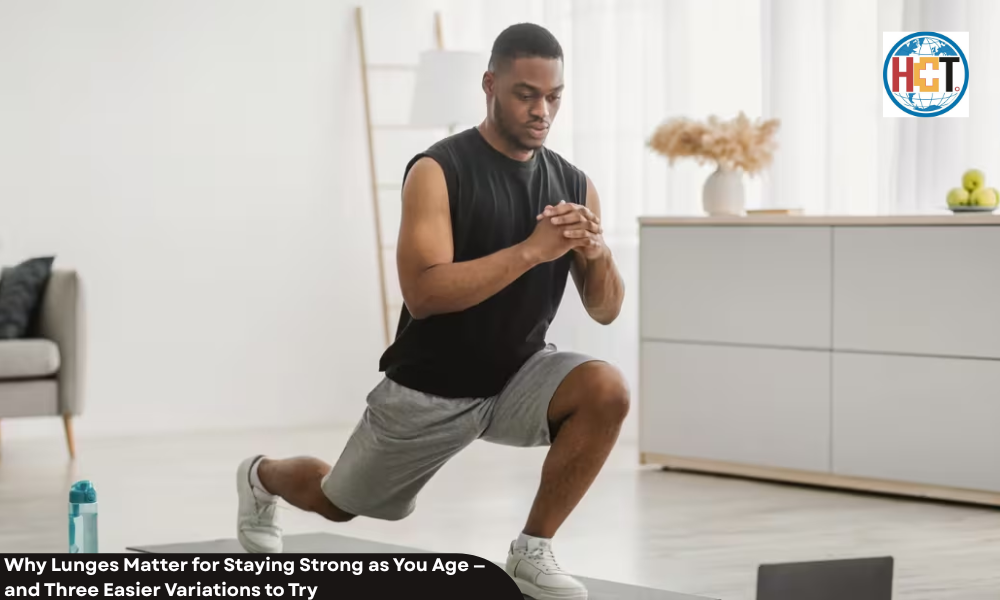
Among single-leg movements, lunges are one of Kuhn’s preferred exercises. She describes them as a highly effective lower-body movement that can benefit people across different age groups.
Lunges challenge the legs individually while also requiring balance, coordination and control. These qualities make them particularly relevant to functional strength, where the ability to stabilize the body and move confidently is just as important as raw muscle power.
However, traditional lunges can be challenging for beginners, older adults or people who are returning to exercise. Easier variations can provide many of the same movement benefits while allowing individuals to build strength progressively.
Three Easier Variations to Try
1. Supported lunges:
Holding onto a sturdy surface can provide additional balance and confidence while practicing the movement.
2. Reverse lunges:
Stepping backward rather than forward can make the movement easier to control and may reduce stress on the front leg.
3. Split squats:
Keeping the feet stationary removes the stepping component, allowing greater focus on strength, stability and technique.
For those looking to maintain strength with age, incorporating manageable single-leg exercises such as these can be a practical way to support balance, mobility and everyday movement.
Also Read :- 3 Health Tech Tools Every Doctor and Patient Should Know About