Researchers are increasingly focusing on neurokinin pathways to address vasomotor symptoms (VMS) associated with menopause, including hot flashes and night sweats. These symptoms can disrupt sleep, affect daily activities and reduce quality of life. Advances in understanding the brain mechanisms behind them have helped drive the development of non-hormonal treatment options.
Understanding the Neurokinin Pathways Connection
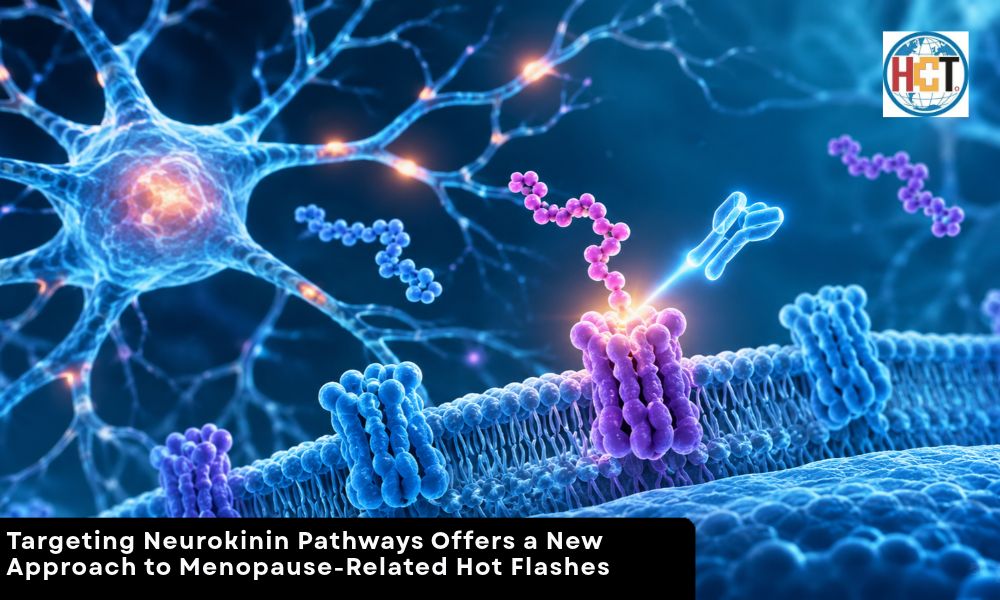
The approach centres on brain cells known as KNDy neurons, which produce kisspeptin, neurokinin B and dynorphin. Located in the hypothalamus, these neurons help regulate reproductive hormones and body temperature.
As oestrogen levels decline during menopause, KNDy neurons can become overactive and release increased amounts of neurokinin B. This activates neurokinin 3 (NK3) receptors involved in the brain’s temperature-control system. The resulting responses can trigger heat sensations, flushing and sweating.
Substance P, another signalling molecule associated with these pathways, interacts with neurokinin 1 (NK1) receptors. This signalling may contribute to blood-vessel changes and sleep disturbances, making both receptors potential targets for treatment.
Dual Receptor Antagonism
A treatment designed to block both NK1 and NK3 receptors is elinzanetant, marketed in the United States as Lynkuet. By inhibiting these pathways, the medicine aims to regulate temperature-control responses and reduce the frequency and severity of moderate-to-severe hot flashes.
Clinical evidence from the Phase III OASIS programme found that elinzanetant reduced VMS compared with placebo. Trials also reported improvements in sleep disturbances and menopause-related quality of life. The US Food and Drug Administration approved the medicine in October 2025, adding a non-hormonal option for eligible patients.
Expanding Treatment Choices
The dual-target approach builds on selective NK3 receptor treatments such as fezolinetant, which reduce menopausal hot flashes. These medicines may be relevant for people who cannot use, or prefer not to take, hormone therapy.
However, treatment decisions require individual medical assessment. Potential side effects, interactions and monitoring requirements should be discussed with a healthcare professional. Researchers continue to examine the longer-term effects and precise mechanisms of Neurokinin Pathways -targeted therapies.
Overall, targeting NK1 and NK3 receptors represents a development in understanding and managing menopause-related VMS.
Also Read :- Flu Season Arrives Earlier Than Expected: An ER Doctor’s Guide to Staying Healthy During the Holidays