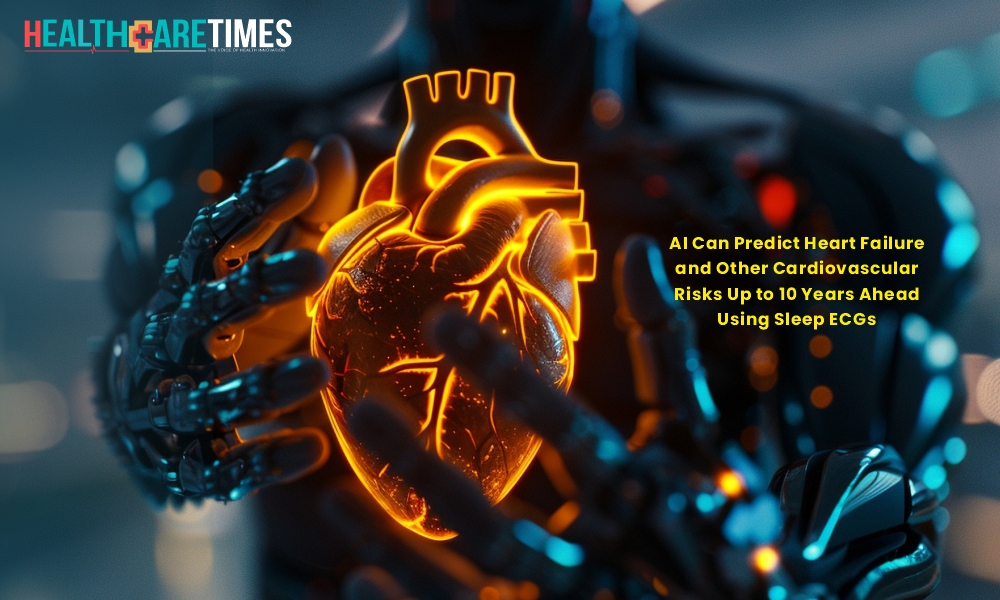
The way the heart behaves during sleep could offer an early warning of serious cardiovascular conditions years before symptoms appear. Researchers have developed an artificial intelligence (AI) system that analyzes electrical signals recorded during sleep to predict an individual’s risk of atrial fibrillation, stroke, heart failure, and death from any cause over the following decade.
Published in the journal SLEEP and supported by the US National Institutes of Health (NIH), the findings highlight the potential of sleep-based heart monitoring as a tool for identifying people at elevated long-term cardiovascular risk.
The approach relies on data from a single electrocardiogram (ECG) lead placed on the chest during sleep. By analyzing the heart’s electrical activity during the early stages of sleep, when the nervous system undergoes rapid changes, the AI model can identify patterns associated with future health outcomes.
Training AI on Thousands of Patients
Led by researchers at Emory University, the team initially trained a deep-learning model using data from nearly 16,000 patients who participated in sleep studies at Massachusetts General Hospital in Boston.
Researchers subsequently evaluated the system using two independent datasets: nearly 10,000 patients from Emory University Hospital and approximately 13,000 from Beth Israel Deaconess Medical Center in Boston.
The model successfully classified participants into different categories of long-term cardiovascular risk. Its predictions remained informative even after researchers accounted for conventional risk factors and sleep characteristics.
For every standard-deviation increase in the AI-generated risk score, the risk of developing atrial fibrillation was 103% to 172% higher. The corresponding increases were 19% to 40% for stroke, 69% to 133% for heart failure, and 65% to 82% for death from any cause.
Only one patient group demonstrated a significantly elevated risk of future myocardial infarction, or heart attack.
Early Detection Could Transform Prevention
David Goff, acting director of the NIH’s National Heart, Lung, and Blood Institute, said the approach could help identify people vulnerable to cardiovascular disease years before clinical symptoms emerge.
However, researchers emphasized that further evaluation is necessary to determine whether incorporating sleep-derived ECG predictions improves existing cardiovascular risk assessment methods.
If validated for clinical use, the technology could help healthcare professionals identify high-risk individuals earlier and potentially guide preventive monitoring and interventions. The findings represent a promising step toward using AI-powered sleep analysis to strengthen long-term cardiovascular care, although the model is not yet a substitute for established medical assessments.
Also Read :- PCOS Awareness Month: Why Your Cycle Can Signal Diabetes Risk