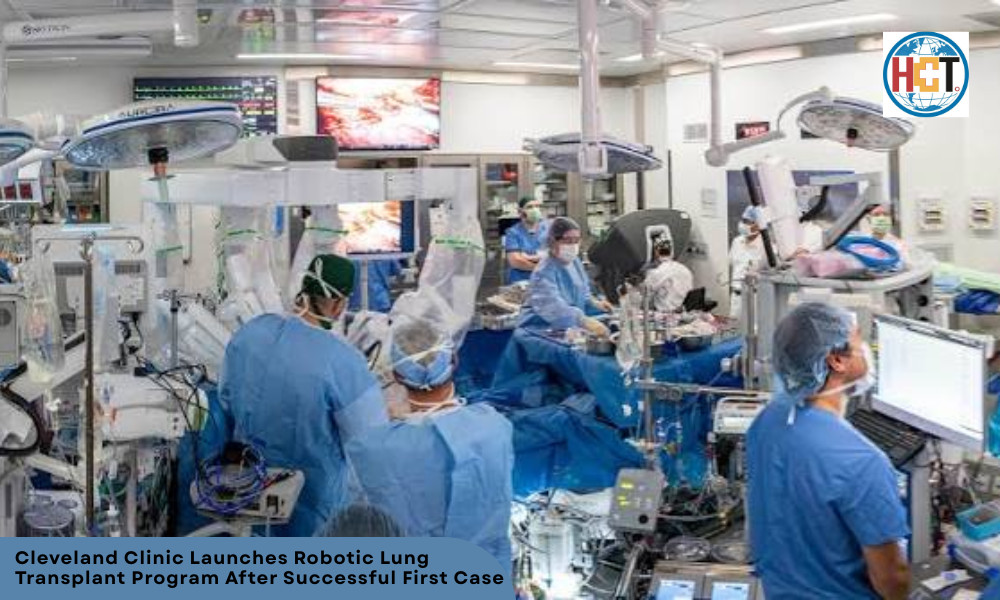
Cleveland Clinic has taken a significant step in transplant surgery after successfully completing its first robotically assisted lung transplant in the United States, formally launching a new robotic lung transplantation program at its Main Campus.
The procedure was led by thoracic surgeon Gregory Jones, MD, with support from Kenneth McCurry, MD, Surgical Director of Lung Transplantation.
A Complex Procedure, Minimally Invasive Approach
The transplant involved a single right lung and was performed on a 74-year-old man with progressive idiopathic pulmonary fibrosis who required continuous oxygen support. Because the disease was more advanced in his right lung, physicians determined that a single-lung transplant was an appropriate option.
The patient was placed on the transplant waiting list in February 2026 and was considered an ideal candidate for a robotic approach because of his larger chest size, which provided sufficient space for the procedure, as well as his strong functional condition.
When a suitable donor lung became available in May, the surgical team performed the 7.5-hour operation using the da Vinci Xi robotic platform, supported by peripheral venoarterial ECMO.
Smaller Incisions, Faster Recovery
The robotic system was positioned through five ports requiring approximately one-centimeter incisions. Surgeons removed the diseased lung and introduced the donor organ through a 5.5-centimeter incision between the ribs, avoiding rib fractures and extensive chest retraction.
The patient was walking and no longer required oxygen within 24 hours of surgery. He reported minimal postoperative pain, left the ICU within 48 hours and returned home less than two weeks after the procedure.
Two months later, follow-up testing showed excellent lung function. His breathing had improved dramatically, and he no longer required supplemental oxygen.
Expanding the Future of Transplantation
The achievement places Cleveland Clinic among a small group of medical centers worldwide performing robotic lung transplantation. Its Abu Dhabi facility previously completed two robot-assisted lung transplants in 2025.
Robotic assistance can provide surgeons with magnified three-dimensional visualization and greater instrument flexibility, while patients may benefit from smaller incisions, reduced pain, less reliance on pain medication and faster recovery.
Cleveland Clinic transplant leaders say the technique will initially be reserved for carefully selected patients, but its potential applications could expand as experience grows.
The program reflects Cleveland Clinic’s broader investment in robotic transplantation, with clinicians anticipating applications across lung, kidney, liver and potentially uterus transplantation, alongside continued efforts to improve patient safety, recovery and long-term outcomes.
Also Read :- Cleveland Clinic Opens Two New Research Buildings to Accelerate Medical Innovation