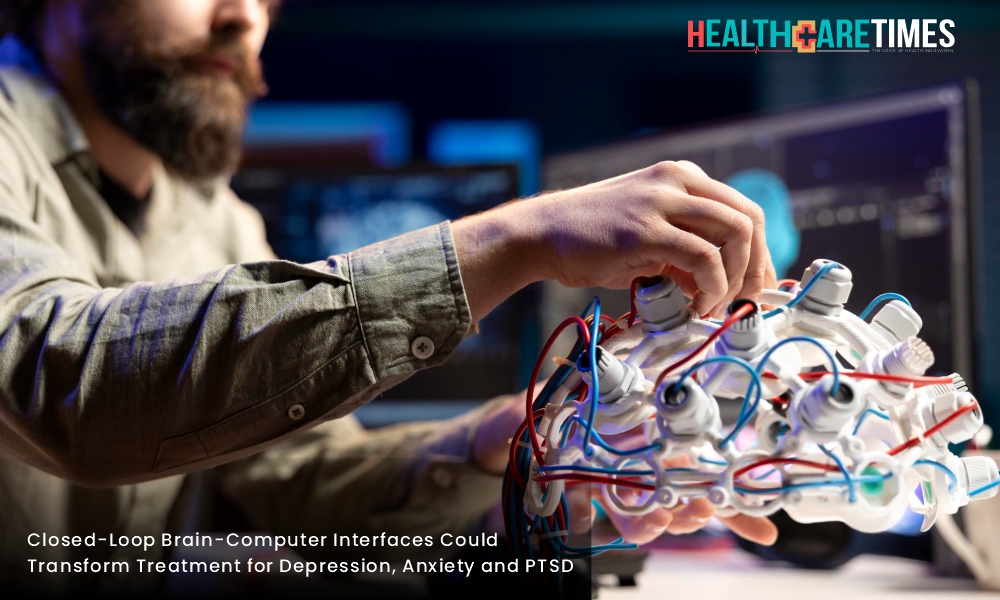
A new perspective review has proposed a roadmap for the next generation of cognitive brain-computer interfaces (BCIs), highlighting their potential to revolutionize the treatment of psychiatric disorders such as depression, anxiety, post-traumatic stress disorder (PTSD), and obsessive-compulsive disorder (OCD). The researchers argue that advances in neurotechnology could extend the use of BCIs far beyond their traditional role in restoring movement for people with paralysis.
Brain-computer interfaces have primarily been developed to decode signals from the motor cortex, allowing individuals with severe physical disabilities to communicate or control assistive devices. However, the review suggests that the same technology could be adapted to identify and regulate abnormal brain activity associated with mental health conditions.
Moving Beyond Motor Function
The authors explain that treating psychiatric disorders presents a far more complex challenge than restoring motor function. Unlike movement-related signals, which originate largely from specific regions of the brain, conditions such as depression and anxiety arise from interactions across multiple neural networks that continuously evolve over time.
As a result, future BCIs will need to move away from static decoding of motor cortex activity and instead track dynamic patterns across interconnected brain regions. Monitoring these distributed neural circuits in real time could provide deeper insights into how psychiatric symptoms emerge and fluctuate.
The researchers believe that capturing these rapidly changing brain states is essential for developing more effective and personalized therapies.
Toward Closed-Loop Cognitive BCIs
At the heart of the proposed roadmap is the development of closed-loop brain-computer interfaces. Unlike conventional neuromodulation systems that deliver stimulation at fixed intervals, closed-loop BCIs continuously monitor brain activity and respond automatically when abnormal neural patterns are detected.
The review recommends combining real-time intracranial neural decoding with adaptive neuromodulation technologies. Such systems would be capable of identifying the onset of psychiatric episodes and delivering precisely timed neurostimulation to interrupt or regulate dysfunctional brain activity before symptoms intensify.
This adaptive approach could significantly improve treatment outcomes by tailoring therapy to an individual’s moment-to-moment neural state rather than relying on pre-programmed stimulation schedules.
A New Era for Mental Health Treatment
The researchers believe that integrating advanced neural decoding with responsive neurostimulation could mark a major step forward in precision psychiatry. By detecting emerging psychiatric states and delivering targeted interventions in real time, closed-loop cognitive BCIs may offer more effective, personalized, and long-lasting treatments for conditions that often prove difficult to manage with medication or psychotherapy alone.
While significant technical and clinical challenges remain before these systems become widely available, the proposed framework provides a foundation for future research aimed at bringing intelligent brain-computer interfaces into mainstream psychiatric care.
Also Read :- Study Suggests Coffee May Help Combat Stress and Ageing Through Key Cellular Receptor