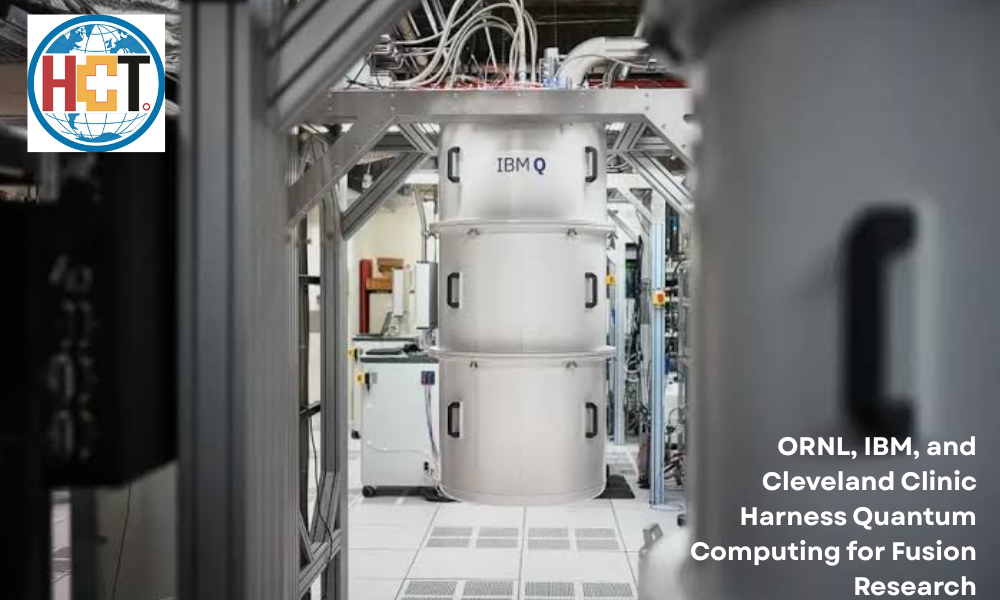
Scientists from the U.S. Department of Energy’s Oak Ridge National Laboratory (ORNL), IBM, and the Cleveland Clinic have successfully used quantum computing to study the molecular behavior of a key material used in fusion energy research, marking another step toward developing cleaner and more sustainable energy technologies.
The collaborative effort focused on FLiBe, a molten salt composed of fluorine, lithium, and beryllium, which is widely regarded as one of the most promising materials for producing and extracting tritium, the essential fuel required for nuclear fusion reactors. The findings have been published in a research paper on the scientific preprint platform arXiv.
Quantum Computing Accelerates Scientific Discovery
The research forms part of the U.S. Department of Energy’s Genesis Mission, an initiative designed to speed up scientific breakthroughs by combining high-performance computing, artificial intelligence (AI), and quantum computing.
According to Tom Beck, Section Head for Science Engagement in ORNL’s Computing and Computational Sciences Directorate, advanced quantum systems are becoming vital tools for solving complex scientific problems that traditional computers struggle to address efficiently.
He noted that integrating IBM’s quantum computing capabilities with AI and exascale computing technologies could significantly shorten the time needed to discover and develop materials capable of producing enough tritium to support future fusion power plants.
Studying FLiBe at the Molecular Level
Using a quantum-centric supercomputing approach, researchers combined the strengths of quantum and classical computing systems to calculate nine different molecular configurations of FLiBe, both with and without tritium.
This hybrid computing method enabled scientists to examine the material’s electronic structure in detail and better understand how tritium atoms interact with FLiBe at the molecular level. The team also evaluated various atomic arrangements, binding strengths, and interaction mechanisms, providing valuable insights into the material’s performance in future fusion reactors.
Kenneth Merz, a staff scientist at the Cleveland Clinic and the corresponding author of the study, said the research expands computational techniques previously used in biological simulations into the field of materials science. He added that combining quantum computing, AI, and high-performance computing offers researchers faster and more accurate ways to tackle highly complex scientific challenges.
Future Research and IBM’s Quantum Vision
The research team plans to further refine the computational workflow by reducing the time required to exchange data between quantum and classical computing systems while expanding the size and complexity of molecular simulations.
IBM said the long-term goal is to provide the global fusion research community with advanced computational tools capable of designing and validating materials for next-generation fusion energy systems.
The study also aligns with IBM’s broader quantum computing strategy. Earlier this year, the company announced plans to invest up to $10 billion over the next five years to accelerate quantum computing research and commercialization. The roadmap includes the development of IBM Quantum Starling, a fault-tolerant quantum computer targeted for launch in 2029, alongside collaborations aimed at building future large-scale quantum computing networks.
Also Read :- Mayo Clinic Platform_Accelerate Selects 20 HealthTech Startups to Advance AI-Driven Healthcare Innovation