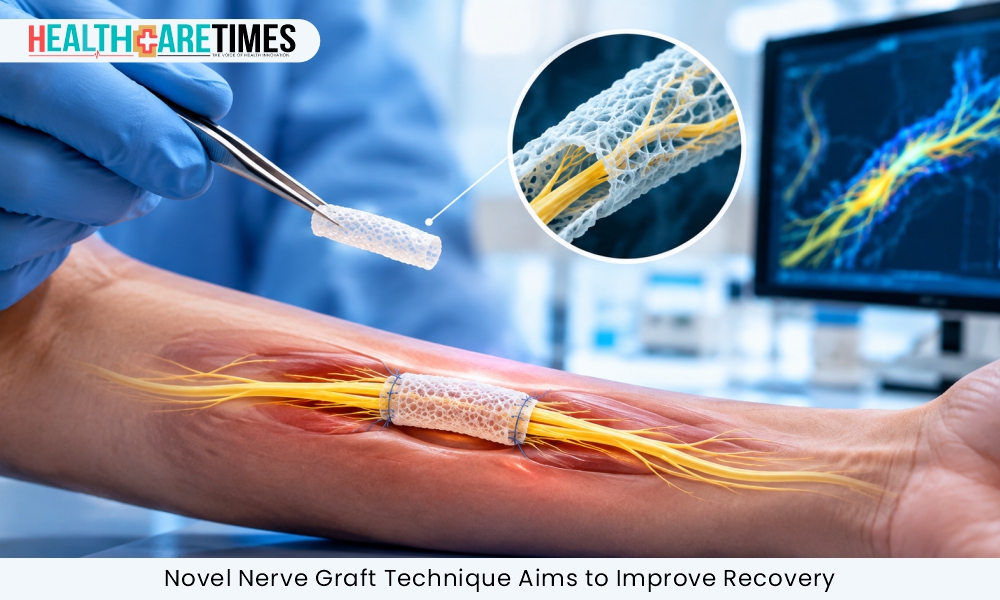
A novel nerve reconstruction procedure is offering new hope for men seeking to preserve erectile function after prostate cancer surgery. The investigational technique uses specially processed donor nerve tissue to support the regeneration of nerves remaining after cancerous tissue has been removed.
For Tom Bruckman, the procedure carried personal significance. During his career with the American Foundation for Urologic Disease, now known as the Urology Care Foundation, he helped promote prostate cancer awareness and the importance of early detection.
At 75, Bruckman became a prostate cancer patient himself.
Tom’s Prostate Cancer Treatment
Tom was diagnosed with localized prostate cancer in 2025 after years of regular screening, including prostate-specific antigen (PSA) blood tests. He worked with Cleveland Clinic urologists Zeyad Schwen, MD, and Bradley Gill, MD, to determine his treatment options.
He ultimately underwent a multi-port, robot-assisted radical prostatectomy performed by Dr. Schwen. Because testing showed that the cancer had extended beyond the prostate and into nerves involved in erectile function, the surgery also included a cavernosal nerve allograft.
The technique remains investigational in urologic surgery. However, the donor nerve tissue used in the procedure has received FDA approval for other applications, including repairing sensory and motor nerve injuries following trauma and restoring sensation after mastectomy and breast reconstruction.
Tom was among the first group of men to receive the nerve allograft during prostate cancer surgery.
How the Novel Nerve Graft Works?
According to Dr. Schwen, the graft acts as a biological scaffold that may help remaining nerves reconnect and regenerate over time. The goal is to support a faster or more complete return of erectile function and improve quality of life following surgery.
Tom was considered a suitable candidate because his cancer had affected nerves that needed to be removed during treatment. Additional testing, including genetic evaluation, helped his medical team develop a treatment plan combining surgery with the investigational reconstruction technique.
Years of Monitoring
Tom’s treatment journey began years before his diagnosis. In 2021, he developed symptoms linked to an enlarged prostate and experienced rising PSA levels. Dr. Gill performed a transurethral resection of the prostate (TURP), but no cancer was detected at that time.
Continued monitoring eventually revealed further PSA increases. A biopsy in 2025 confirmed prostate cancer that had spread into nearby tissue, including nerves associated with continence and erectile function.
Tom continues to return to Cleveland for follow-up care, while his experience highlights the importance of screening, treatment options and ongoing advances in prostate cancer surgery.
Also Read :- Insomnia Treatment May Help Slow Biological Aging, Study Finds