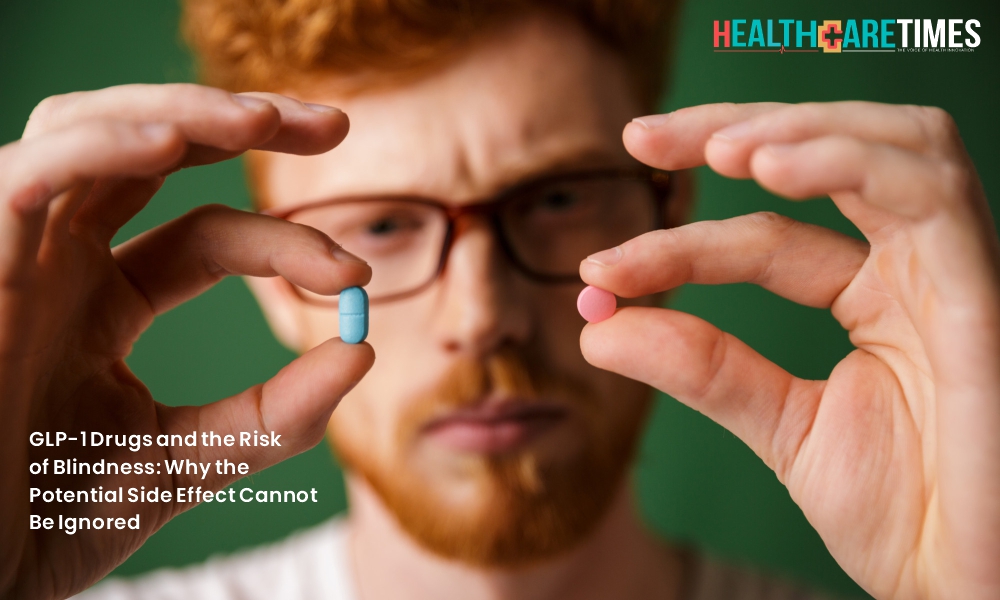
GLP-1 Drugs medications have reshaped the treatment of obesity and type 2 diabetes, offering millions of patients new options for managing their health. Popular drugs such as Ozempic, Wegovy, Mounjaro and Zepbound have gained widespread attention. However, growing concerns about a rare but potentially serious eye complication have raised questions about their long-term safety.
The US Food and Drug Administration (FDA) has now required manufacturers of GLP-1 medications to update their product labels with warnings about non-arteritic anterior ischaemic optic neuropathy (NAION), a condition that can cause sudden and permanent vision loss.
What Is NAION and How Does It Affect Vision?
NAION is sometimes described as a stroke of the optic nerve. It occurs when blood supply to the front portion of the optic nerve is reduced, depriving the tissue of essential oxygen and nutrients.
Unlike eye conditions that develop gradually, NAION can cause sudden changes in vision. Patients may wake up with blurred, distorted or significantly reduced eyesight in one eye, often without experiencing pain or any preceding symptoms.
The consequences can be permanent. There is currently no established treatment that reliably restores vision lost to the condition. Although some patients experience limited spontaneous improvement, others are left with lasting visual impairment that affects their ability to drive, read, work and perform everyday activities.
What Do Regulators Say About GLP-1 Drugs?
The FDA’s decision follows an earlier assessment by the European Medicines Agency (EMA), which classified NAION as a very rare potential side effect of semaglutide, the active ingredient in Ozempic and Wegovy.
European regulators estimated that the complication could affect up to one in 10,000 users. The FDA’s review, which included clinical trial data involving more than 134,000 participants, identified a rate of 6.4 cases per 100,000 GLP-1 users.
However, researchers have not established a definitive cause-and-effect relationship between these medications and NAION.
Why Patients Should Remain Cautious?
The potential risk does not mean everyone taking GLP-1 medications will develop vision problems. However, even rare complications deserve attention when medicines are prescribed to millions of people.
The FDA’s updated warnings represent an important safety measure. Patients should discuss potential risks with their healthcare providers and seek immediate medical attention if they experience sudden changes in vision. Understanding the possible complications is essential to making informed treatment decisions.
Also Read :- WHO Introduces New Childhood Obesity Guidelines