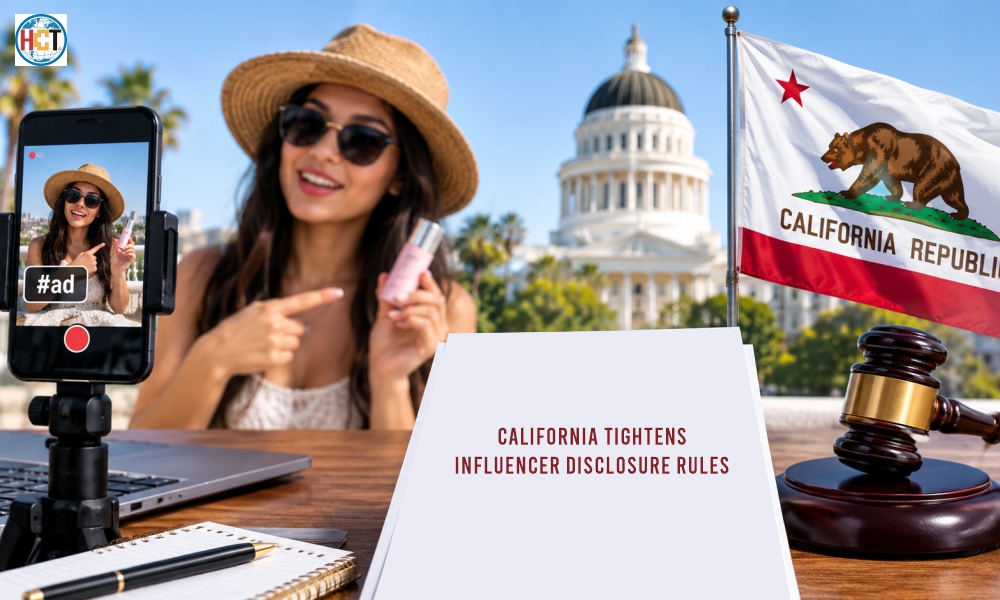
California has strengthened rules governing paid political content on social media, giving regulators enforcement powers over influencers who fail to disclose payments. Governor Gavin Newsom signed Assembly Bill 1130 on September 19, making administrative, civil, and criminal penalties available when a person paid by a campaign committee posts political content supporting or opposing a candidate or ballot measure without the required disclaimer.
Closing an Enforcement Gap
Under earlier rules, paid third-party posters had to identify their financial relationship to a campaign, but individuals who failed to include the Influencer Disclosure generally were not subject to the same enforcement provisions. AB 1130 changes that framework by attaching liability to undisclosed paid political posts.
The legislation also requires campaigns to identify spending for paid social-media posts in campaign filings, making payments easier to track.
The California Fair Political Practices Commission supported the measure, which was unanimously approved by the state Legislature before being signed by Newsom. The law strengthens compliance as campaigns use social-media creators to communicate with voters.
Influencer Disclosure ’ Growing Political Role
Influencers have become a prominent channel for campaigns seeking audiences that consume information through social platforms. Campaigns and political organizations can pay creators to produce political content, while other influencers discuss candidates and issues independently.
Assembly member Marc Berman, who authored AB 1130, said the growth of influencer marketing has changed how candidates communicate with voters. He said disclosure allows audiences to distinguish between independent commentary and paid political messaging.
Scrutiny During California’s Governor’s Race
The issue received heightened attention during California’s 2026 governor’s race. Billionaire investor and climate activist Tom Steyer spent more than $200 million on his campaign, which was unsuccessful. According to Los Angeles Times reporting, his campaign paid social-media influencers to produce favorable content, with some posts initially failing to disclose those payments.
Those posts prompted a complaint to California’s Fair Political Practices Commission alleging violations of state disclosure requirements.
AB 1130 now gives authorities additional tools to address similar cases, while requiring campaigns and paid creators to provide clearer information about political content appearing on social-media feeds.
Also Read :- Doctor Debunks Popular Sleep Products and Offers Better Sleep Advice